


Tamales in a Pressure Cooker, and other Japanese Kominka Necessities

Life has a way of moving right along quicker than we think, no matter if we're enjoying the simple life or a full schedule.

It’s been a month now of being back in British Columbia, and I still have so much to say about our wintery season in Japan.
Slow cycles are always better than one that has stopped: My notebooks are overflowing: sakura preservation, oboro kelp (that delicate, shaved, almost bonito-like texture), and wild Japanese spring vegetables. I shared a bit about hoshigaki, the delicious hanging dried persimmons of Japan, in one of my last posts, which, wildly enough, was over four months ago. I want to return to kanzuri too, the snow-dried and fermented chili paste from Myoko, from the same area where we skied most of the winter.
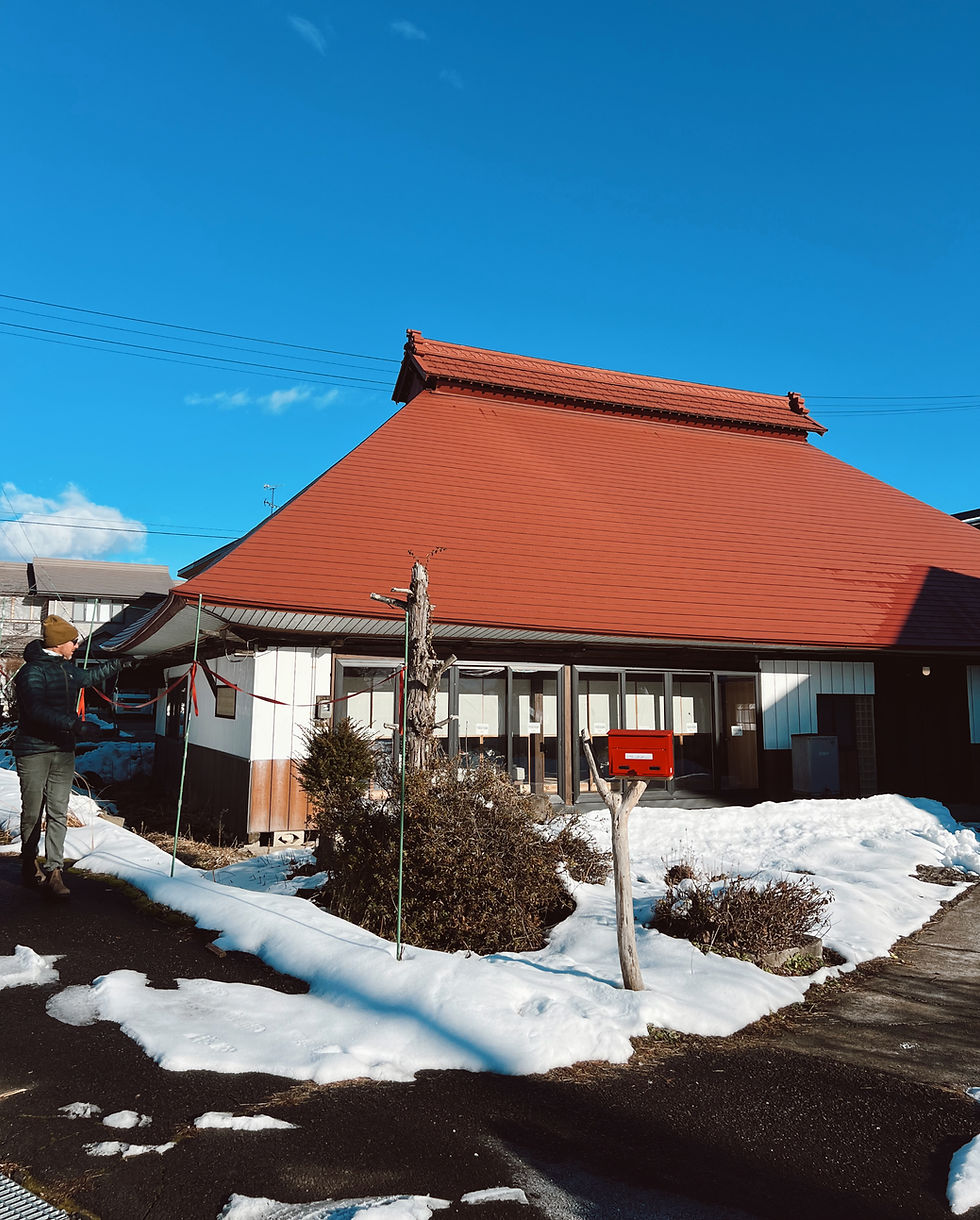
But for now, I keep coming back to my notes from the season as a whole our time at the kominka tucked into the rice fields of Nagano, in the foothills of Mount Izuna and Mount Kurohime, sister volcanoes to Myoko-san.
In the valley, it snows far less than at elevation, which made life easier keeping the driveway clear, getting out early on mornings when a meter of snow fell overnight. What makes this pocket of Nagano especially beautiful, though, is the agriculture: ringo (apples), kome and sakamai (rice for eating and sake), and soba (buckwheat). I’ve shared pieces of this before and you’ve probably heard me talk about soba (buckwheat) more than once.
But that’s not where I want to start today.


Here’s what I want to write about: making tamales in a pressure cooker.
You need a bit of context first, because this story really comes in two parts.
The first is this: my partner Andrew and I had been planning our winter in Myoko for years now. He bought a van - a gorgeous Toyota HiAce, perfect for hauling skis, friends, and a lot of food - and set up a Godo Kaisha (essentially Japan’s version of an LLC). We rented a house for the season with one main goal: to explore the mountains, and the food, of rural Japan.
We arrived in mid-December.
The house was a modest renovation of an old kominka (traditional rural Japanese home) that we had rented back in the fall. The kitchen was a challenge. Two portable butane gas burners, a small toaster oven, and a microwave that would short the house every time we tried to use it. No oven, which is pretty normal for Japanese houses actually.
I’m a sucker for braised meat - carnitas are nearly a staple in our household. With how quickly we were burning through butane canisters (about one every two days), I knew I had to rethink how I cooked. After a few trips to Hard Off - a thrift store chain with a pretty hilarious English name - we found an array of barely-used pressure cookers.
I’ve always been a little skeptical of them. You’re telling me pork belly can go from hours to minutes? Carnitas in 30 instead of 4 or 5? It always felt like a shortcut that had to come at a nutritional cost. But with limited options, I leaned into it.
The second part of the story starts earlier, back in Mexico City, where Andrew and I met in 2021. We bonded over Mexican ingredients and single-origin everything: mezcal first, of course and a shared obsession with flavor that feels rooted and specific.
Nearly five years later, we’re on the other side of the world, building a hospitality concept shaped by those same flavors…with dried chiles packed in our suitcases. Literally.
I had been planning to make tamales in Japan from the start. They’re one of my favorite things to eat for a snack, breakfast, lunch, any time. I also love to teach tamales as a cooking class for all ages since masa is essentially the equivalent of edible play-dough. Aside from being something that I love to make, we had them on our Mexican menu for private events.
We brought chiles with us from Mexico: guajillo, ancho, chipotle. Achiote paste. A few other essentials. As long as everything is dried and sealed, customs is surprisingly straightforward. We were planning on doing what we do, cooking for private clients in town for a holiday.
We tracked down a market in Tokyo that carried masa, banana leaves, and other heavier Latin ingredients. Then we found Fiesta Farms, a farm just outside the city growing fresh chiles, tomatillos, and more.
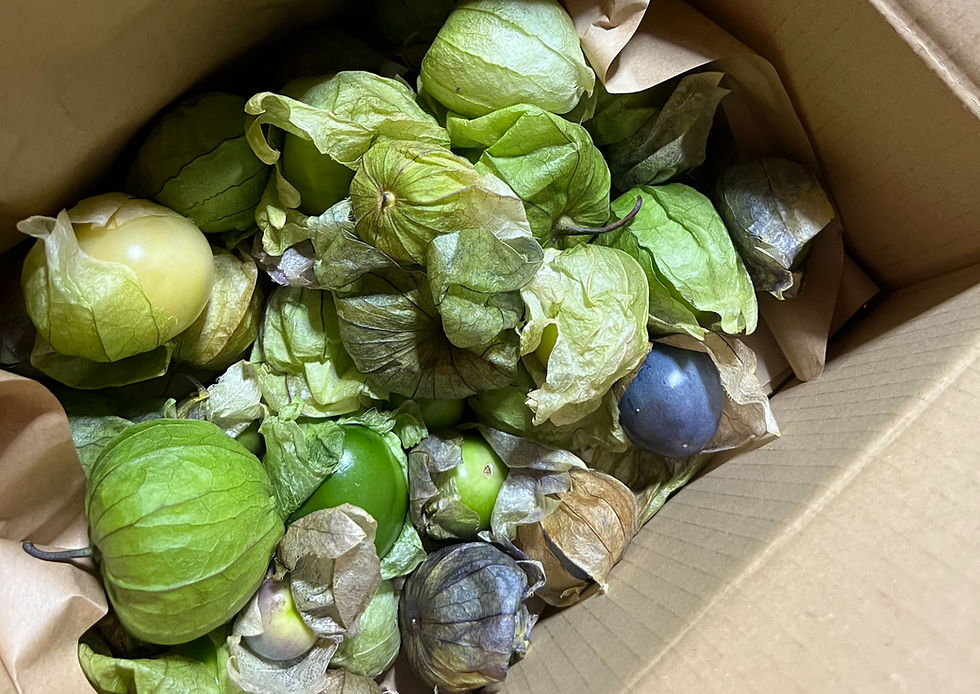
It took a few weeks to get the tomatillos in, but it was worth it. That salsa verde made the whole thing feel complete. Steamed in banana leaves, these feel a little more wild…softer, more fragrant, less rigid than corn husks. The avocado lives in the salsa, not as garnish, bringing everything back to something fresh and alive. If you know this recipe, it’s a close spin off from Gabriella Cámara’s salsa verde.
At first when I was developing this recipe for Japan, I wanted to get all creative. Each day when we went skiing in the backcountry, I was picking late season bamboo leaves, in hope of wrapping the tamales like the Niigata specialty dessert, called Sasadango.

This brings us back to the pressure cooker, and the tamales.
I needed to make these tamales without steaming them on a butane burner for an hour…and that brought me to cooking them in the instapot, which worked like a dream.

Tamales in a Pressure cooker
Long story short, the instapot is my new favorite home kitchen tool.
These tamales are just as tender and they held together perfectly in each little package, and of course took only a fraction of the time and energy to cook.
Ingredients
For the masa
725 g masa harina (nixtamalized + ground)
1L warm broth or water
5g baking powder
10g salt
225 g lard (rendered pork fat) or coconut oil
For the filling
300g cooked filling (chicken, pork carnitas, beef, or mushrooms)
200g mole coloradito
For assembling
Banana leaves, cut into squares (about 10 pieces)
For the salsa verde
10 tomatillos
1-2 fresh chile serrano or jalapeño
1 white onion
4 garlic cloves, skin on
1 bunch cilantro leaves
1 avocado
1 small head romaine lettuce
Salt, to taste
Lime juice, to taste
Prepare
Make the masa
Whip the lard (or coconut oil) until light and airy.
In a separate bowl, mix masa harina, salt, and baking powder. Add warm broth gradually until a soft dough forms.
Fold into the whipped fat and mix until smooth and spreadibly soft and airy, not stiff. Add more liquid if needed.
Prep the banana leaves
Lightly pass each leaf over an open flame or hot pan until glossy and flexible. This wakes them up and lets them bend instead of crack.
Warm the filling
Fold your cooked meat or mushrooms into the mole coloradito and keep warm. Make sure to season and taste! It should be delicious.
Assemble
Lay out a banana leaf square.
Spread a layer of masa in the center with a spoon or your hand. If you would like to get technical, 50g of masa per ball is a good portion size.
Fold the bottom up, then sides over, then fold top to create a sealed packet. Using a thin strip of banana leaf, tie the package in a double knot.
Repeat until all tamales are assembled.
Pressure Cooker Method
Add about a cup water to your pressure cooker (like an Instant Pot Duo).
Add a rack or layer extra banana leaves on the bottom so the tamales don’t scorch or sit in water.
Arrange tamales in the pressure cooker, ideally lined up vertically but I staacked mine and it worked just fine.
Cover with extra banana leaves or a damp cloth to trap gentle steam.
Cook on high pressure for 30 minutes (or meat setting), then allow a natural release for 10–15 minutes.
Make the salsa verde
While your tamales are steaming, whip up your salsa. Or, make it earlier in the day/week. Peel and rinse tomatillos, and give a nice char from the grill or open flame (torch, burner, broiler) to give it flavor. Give your onion and fresh chiles a good char, and garlic cloves a slight char without totally torching it. Chill it out before adding to your tender greens and acid.
Blend charred tomatillos, chiles, onion and garlic with cilantro (I like to give my bunches of cilantro a couple twists to break up the stems before blending), avocado (pitted with no skin) and lettuce until smooth and creamy. Season with salt and lime. If you would like to preserve your salsa for longer (2+ weeks), use the slow simmer method instead of fresh blended salsa, and omit the avocado + lettuce.
Finish, Serve and Save
The masa should feel set and pull away cleanly from the leaf. If still soft or sticking, return to pressure for another 5–10 minutes.
Enjoy hot, garnished with your salsa verde.
To store: chill properly and keep in a sealed container in the fridge for up to 3–5 days, or freeze for 2–4 weeks. To reheat: microwave or steam until warmed through.


Comments